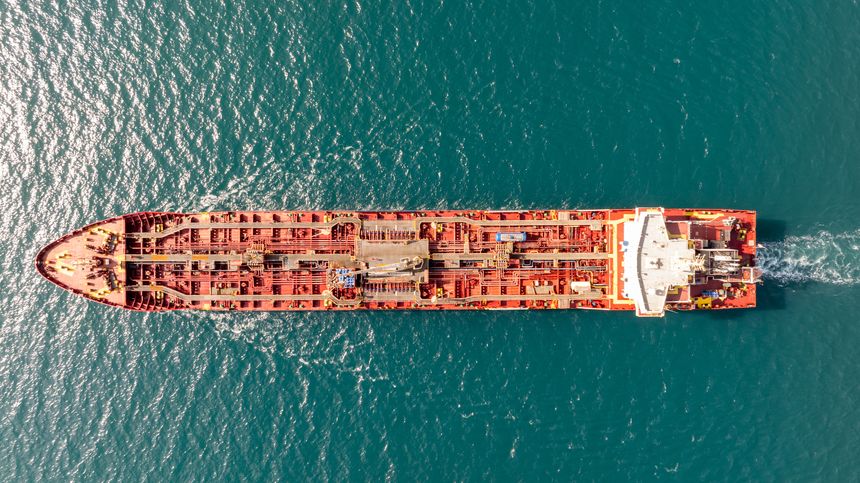
















Amidst escalating geopolitical tensions in the Middle East, the effective closure of the Strait of Hormuz has affected energy markets, maritime transport and global supply chains. The Strait of Hormuz is a key international shipping lane, linking the Persian Gulf to the Arabian Sea and the wider Indian Ocean, through which approximately one-fifth of the global seaborne oil and LNG trade and around 11 percent of global trade passes. But with ongoing tensions, transit through this Strait has come to a near halt, with hundreds of ships anchored on both sides of the waterway. Given those disruptions, several companies have already declared force majeure on shipments to try to excuse delays in performance, or even non-performance, of their contractual obligations.
Whether this is indeed permissible and justifiable requires a rigorous case-by-case evaluation of force majeure claims within commercial contracts. This blog outlines relevant factors that ought to be considered for a first high-level screening.
Contractual wording
The primary consideration is the contractual language. Where a force majeure clause is included in the contract, its specific wording dictates whether the disruptive events fall within its scope. Such clauses commonly define force majeure as an unforeseen event beyond a party’s reasonable control that impedes performance. Often, these clauses include illustrative lists of events such as warfare and hostilities, which could potentially encompass the ongoing conflict affecting the passage through the Strait of Hormuz.
Depending on the contractual language, foreseeability may be a key point of discussion for parties seeking to resist force majeure declarations. For example, with respect to contracts entered into since the 12-day conflict in June 2025, the vote by Iran’s parliament on 22 June 2025 (albeit largely symbolic) to close the Strait of Hormuz may be considered.
Governing law of the contract
In the absence of an explicit contractual force majeure clause, the governing law of the contract must be assessed. Numerous legal frameworks, including those in the France, Spain, China, and many in the Middle East, incorporate statutory force majeure defences that may be invoked in case of contractual silence.
Conversely, in instances where the contract is governed by jurisdictions without statutory force majeure provisions—such as Germany, Singapore, England and most US states—contractual silence would render a force majeure defence unavailable. In such cases, alternative contractual or legal remedies should be assessed.
Regardless of whether the contract contains a force majeure clause, it is advisable to undertake a thorough analysis of the applicable law. The interplay between the applicable law and the contract may be relevant in some circumstances where, as a matter of legal strategy, the parties may wish to rely on the statutory framing of the force majeure defence.
Causal link
A direct causal link must also be established between the disruptive event and the non-performance. The required threshold for this link varies by contract. Some agreements demand that the force majeure event renders performance impossible, while others accept a lower threshold where performance is merely “hindered” or “delayed.”
Due to the situation in the Strait of Hormuz, shipping companies are undertaking different transit and cargo discharge strategies. The de facto closure of the Strait has caused severe congestion on both sides of the waterway with ships either trapped inside the Persian Gulf or waiting in the Gulf of Oman to enter the region. Current events have also had a knock-on effect for the Trans-Suez route, with heightened security risks for ships crossing the Bab al-Mandab Strait, which has also been subject to disruptions and force majeure considerations in the past. As such, some carriers have avoided the Suez Canal altogether, for the long way around Africa, through the Cape of Good Hope. Moreover, with most ports in the Gulf now inaccessible, some companies have rerouted vessels, discharging cargo at alternative ports within the Arabian Peninsula, Indian Ocean hubs, or outside the region entirely, for onward redistribution to the originally intended markets. Irrespective of the chosen strategy, carriers face significant operational disruptions, including delays and increased transshipment risks which ultimately have an impact on schedules, deliveries and overall planning.
Legal consequences are not the same for all types of cargo. For instance, the need to reroute vessels, adding significant transit times, might constitute non-performance or give rise to non-delivery claims, particularly for time-sensitive or perishable goods. Whether there are sufficient grounds to excuse a party from fulfilling its contractual obligations will depend on the specific scope of the force majeure clause (or statutory force majeure defence) and the specific circumstances of each case.
Establishing this causal link becomes more complex when non-performance stems from a “domino effect” along the supply chain. In such cases, an indirectly affected party may need to prove not only that the disruption impacted its supplier, but also that the supplier's own declaration of force majeure was valid. The specific contract language is again crucial; a clause that expressly accounts for the failure of suppliers or subcontractors can be decisive in substantiating such a claim.
Ability to overcome disruption
A party’s ability to overcome the effects of the disruption through reasonable efforts is another relevant factor to be considered. Tribunals frequently scrutinise whether a party invoking force majeure could have mitigated the obstacle.
A rise in operational expenses, such as for alternative shipping routes, may not be sufficient for force majeure to excuse performance completely if performance remains feasible, albeit more expensive. The reasonableness of the decision as to whether to pursue alternative, lengthier, and more costly routes is therefore a key point for consideration.
Allocation of supply
As many suppliers observed during the supply chain shocks caused by COVID-19, when a force majeure event reduces (but does not entirely eliminate) supply, parties may be required to make a reasonable allocation among affected customers. A reasonable allocation need not be a pro rata one, but proportional allocation is likely to be considered reasonable. The same decision point will, once again, arise for any supply chains affected by recent geopolitical events. Allocation of supply will continue to be particularly important for businesses supplying commodities, where scarcity can have immediate consequences for commercial decisions and create incentives for surcharge pricing and customer prioritisation.
Whatever approach is taken to allocation, the most important step is to identify the contractual obligations that apply across the business, for all customers, and to assess the risks holistically. If allocation is carried out contrary to a party’s contractual obligations or in a way that appears unreasonable, commercially opportunistic or inconsistent with past practice, counterparties may argue that the “force” was not truly beyond the party’s control in the context of their specific relationship. Failure to allocate in accordance with any express terms concerning allocation will, of course, also weaken any claim of force majeure.
For any affected businesses supplying to customers globally, a multi-jurisdictional assessment of allocation risks should therefore be carried out before implementing allocation decisions. And buyers on the receiving end of force majeure notices should consider requesting evidence that supply has been allocated on a reasonable basis among the supplier’s various contracts.
Compliance with notice requirements
Finally, strict adherence to notice provisions is key. Force majeure clauses typically stipulate requirements for timely notification, often demanding that notice be given “without delay” once an impediment to performance arises.
The precise moment at which performance becomes impeded can be complex to ascertain in dynamic situations such as in the Strait of Hormuz. However, any force majeure analysis will require considering this fundamental point in light of the circumstances of the specific case – and may also weigh in favour of sending a protective or precautionary force majeure notice, subject to applicable law. Crucially, failure to provide timely notice can invalidate a force majeure claim for prior non-performance and may prevent the activation of other contractual obligations, such as the requirement to negotiate mitigation measures.
Takeaways
The application of force majeure as a contractual defence is not automatic but requires a comprehensive legal analysis that considers the specific contractual terms, the applicable governing law, and the unique factual circumstances of each case. Even if force majeure is deemed inapplicable, other remedies designed to rebalance economic hardship, such as frustration, hardship clauses, or material adverse change provisions, may still offer recourse.