
















Libya is re-emerging as a significant destination for international investment, particularly within the energy, renewables, and infrastructure sectors. While this follows a sustained period of political instability, recent developments suggest renewed momentum as the country targets economic diversification, energy capacity expansion, and infrastructure upgrades.
1. New Oil & Gas Licensing Round and EPSA V Framework
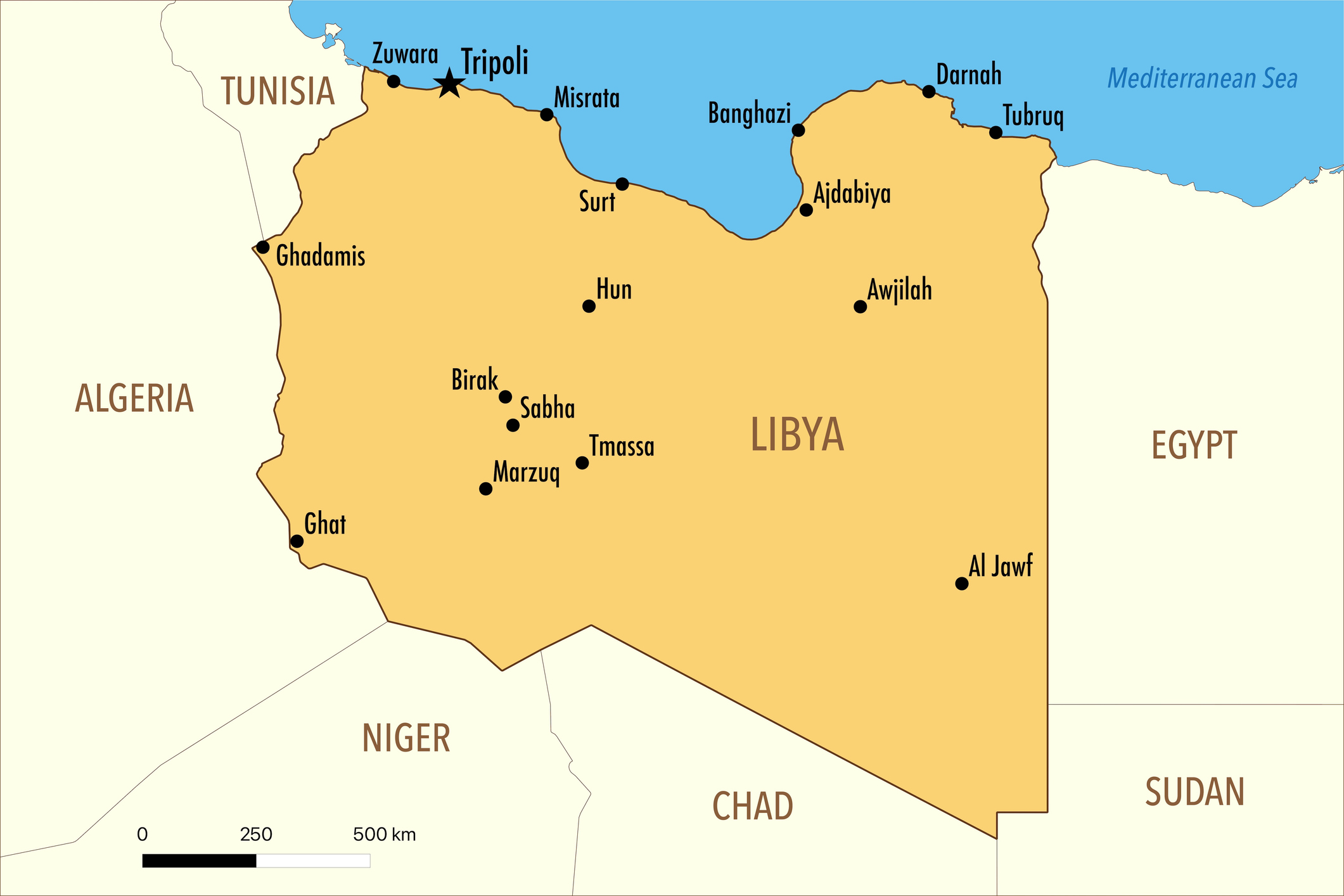
In March 2025, Libya’s National Oil Corporation (NOC) launched its first oil and gas licensing round in 17 years, offering 22 blocks (onshore and offshore) across three key basins: Sirte, Murzuq, and Ghadames. This round is a centrepiece of Libya’s strategy to boost production (targeting 2 million barrels per day by 2028) and to add 8 billion barrels to proven reserves in the next 25 years. 37 companies (e.g. bp, Chevron, ExxonMobil, Eni) are qualified to bid, with companies expected to submit offers and open bids in February 2026. The terms of the exploration contracts will be governed by the new Exploration and Production Sharing Agreement (EPSA) V, which is designed to enhance Libya’s competitiveness for international oil companies (IOC). The terms of EPSA V include:
- More favourable profit-sharing: EPSA V eliminates the “B factor” that previously, under EPSA IV, reduced contractors’ profit share as production increased. It also incorporates a new “R factor” which smooths reductions in profit share once contractors reach certain earnings. This results in a steadier investor return and allows contractors to expand production without automatically losing a larger share of revenue.
- Enhanced cost recovery: Fixed rate cost recovery allows contractors to recoup investment faster, shortening payback periods.
- NOC tax handling: The state continues to pay income tax on behalf of contractors, reducing administrative burden and mitigating fiscal exposure.
- Risk allocation: Contractors bear all costs, but benefit from potentially higher internal rates of return and accelerated profit-sharing mechanisms.
Historically, EPSA dealt with disputes by (1) amicable settlement and (2) arbitration at the International Chamber of Commerce in Paris. While it is not yet clear if EPSA V follows the same model, bilateral investment treaty protections (encompassing, in most instances, similar dispute resolution mechanisms) will regardless be available where relevant. The competitive reform of Libya’s EPSA could result in more stable and internationally recognisable risk allocation and dispute resolution mechanisms, which in turn could trigger rising interest in Libyan energy assets among private equity and institutional investors.
2. Key Developments & Opportunities
Aside from the licensing round, recent notable developments in Libya include:
- Oil & Gas: Structures A&E and Mellitah Oil & Gas have been advancing a major offshore gas development project, involving an $8.8 billion investment. As large-scale projects advance and Libya ramps up its upstream capacity, there will be growing opportunities for international investors to participate in project development or provide specialised services.
- Renewables: TotalEnergies and GECOL have been progressing what will be Libya’s largest solar PV plant at 500MW. Commissioning is expected in 2026. Such major renewables investments signal Libya’s intent to diversify its energy dependence and embrace sustainable development, offering substantial opportunities for those with expertise in clean energy and technology transfer. Further, continued investment in renewables reflects growing policy support for green energy and offers inroads for climate finance and public-private partnerships in the region.
- Water: International donors IFAD and UNOPS launched a water project aimed at combatting water scarcity, funded with $9.2 million from the Adaptation Fund grant. The reliance on blended finance and concessional capital for essential sectors like water reflects an increasing openness to innovative financing approaches – investors exploring sustainable or impact-driven strategies may find growing prospects here. Ongoing donor-backed water initiatives may catalyse broader interest in sustainable infrastructure, agritech, and circular economy solutions among environmentally minded stakeholders.
- Digital infrastructure: Medusa Submarine Cable System and Inwi’s project, the Medusa submarine cable, connects Europe and North Africa. It has been operational since May 2025 and involved c. $390 million in investment. The development of Libya’s digital infrastructure positions the country as a potential regional connectivity hub in future cross-border data, fintech, and telecom ventures across MENA and southern Europe; investors seeking inroads into Africa’s digital economy boom should monitor this evolving landscape for early opportunities.
3. Investment Climate and Risks
Libya holds Africa’s largest proven oil reserves, but about 70% of its land and 65% of its waters remain unexplored. The country benefits from OPEC+ quota exemption, proximity to Europe, and a regulatory framework considered predictable by the industry. However, risks persist:
- Security and governance: As political divisions in Libya remain, bids may face opposition from the public or eastern authorities. This increases the risk of production disruptions or protests. Therefore, enhanced due diligence and dynamic risk monitoring will be vital in navigating Libya’s political complexities and shifting security environment; investors who incorporate flexible operational frameworks and contingency planning may better safeguard their assets and project timelines as conditions evolve.
- Wait-and-see approach: As a result, IOCs may prioritise pilot projects and exploration, delaying major capex (capital expenditure) decisions pending political clarity and legal assurances. Investors seeking first-mover advantage should consider building local partnerships and keeping a watching brief on regulatory developments, as market sentiment may shift rapidly with political stabilisation.
4. International Investment Protections
Investments in Libya may benefit from protection under international law, in addition to contractual and legislative provisions. Libya is party to 26 bilateral investment treaties (BITs) in force with a range of countries, including Singapore, France, Germany, Italy, and Switzerland. In addition, Libya is a signatory to the Agreement on Promotion, Protection and Guarantee of Investments among the Member States of the Organisation of the Islamic Conference (1981) (OIC Agreement), a multilateral investment treaty that introduces a protection regime across the OIC member states.
- Dispute resolution: Most BITs and the OIC Agreement provide for the resolution of investor-state disputes through international arbitration, offering investors a neutral and enforceable dispute resolution mechanism. Common fora for arbitration under these treaties include the International Centre for Settlement of Investment Disputes, the International Chamber of Commerce, or ad hoc arbitration usually under the Arbitration Rules of the United Nations Commission on International Trade Law.
- Substantive protections: While the core substantive protections – such as fair and equitable treatment, protection against expropriation, full protection and security, most favoured nation treatment, and free transfer of funds – are generally provided for in similar terms across BITs, each instrument is different, potentially with varying scope and strength of protections. For example, the OIC Agreement does not require fair and equitable treatment. In addition, most favoured nation treatment under the OIC Agreement is subject to several exceptions that may limit its practical effect for investors.
Therefore, before investing in Libya, investors should identify which treaty may apply to their investment and carefully review the substantive and procedural protections offered, including the dispute resolution provisions and any limitations or special conditions that may apply.
Conclusion
Libya’s renewed oil and gas tender, modernised EPSA V, and emphasis on progression signal a strategic opportunity for international partners. While market entry risks remain, the tender’s improved legal and fiscal framework, coupled with Libya’s project development, creates key opportunities for sophisticated investors and their advisers. Early engagement, thorough risk assessment, and flexible investment models will be critical for those looking to unlock Libya’s long-term growth and diversification trajectory.
For further discussion about specific projects or the legal framework governing investments in Libya, please contact us.
/Passle/5832ca6d3d94760e8057a1b6/SearchServiceImages/2026-03-12-11-25-10-112-69b2a2968b5ecb2782ea355e.jpg)
